

Kenya’s family planning services experienced a 5% increase in the uptake of modern contraceptives at the height of the COVID-19 pandemic last year, possibly contributing to a decline in unwanted pregnancies in the country, a new survey has shown.
The survey, conducted by Performance Monitoring for Action (PMA), shows that the use of family planning services increased from 56% in 2019 to 61% in 2020 in married women and from 40% to 46% in all women, despite curfews and lockdowns.
The PMA generates surveys of key health indicators in nine countries in Africa and Asia, whose open-resource data is available for research, programme planning and policymaking.
The increased use of contraceptives is likely to have contributed to the decline of unintended pregnancies over the same period from 42% to 37%.
The survey – done between November and December last year in 11 counties (Nairobi, Kilifi, Nandi, Nyamira, Kiambu, Bungoma, Siaya, Kericho, Kitui, Kakamega and West Pokot) – also found that unmarried women prefer short-acting methods, while their married counterparts chose longer-acting methods.
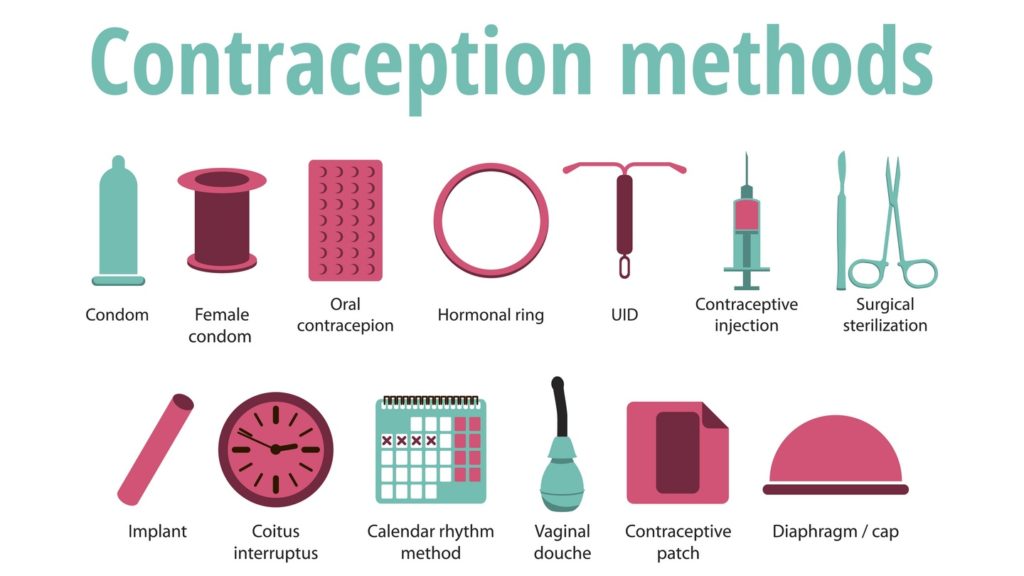
The most popular method for unmarried women were male condoms (29%), injectables and implants (both at 26%). The married women, on the other hand, preferred injectables (39%) and implants (37%).
Family Planning is an Essential Service
Albert Ndwiga, the National Family Planning Program manager in the Ministry of Health, said family planning was an essential service and that the country “had to come up with guidelines quickly to ensure continued care in public health facilities during the pandemic”.
Family planning services are offered free of charge in public health facilities in Kenya. The guidelines were formulated in April last year, giving directives to facilities on how to protect the client and the service provider.
The government is now collaborating with the private sector, which supplies over a quarter of Kenyans (28%) with their family planning methods and commodities.
“Some may choose to get services from the private sector because of the convenience it offers to them, therefore reducing the burden on government-owned facilities,” Ndwiga said, adding that the health ministry has formulated a “total market approach” as a result.
The ministry has also actively engaged with communities “because issues around culture and religious beliefs have for a long time affected the uptake of family planning,” observes Josephine Kinyua, the director of Delivering Equitable and Sustainable Increases in Family Planning (DESIP) in Kenya, a program funded by the UK.
The DESIP program is implemented in 19 counties where the modern method contraceptive prevalence rate is less than 45%.
Commodity Financing and Economic Empowerment
Ndwiga said family planning was going to be included as one of the government’s four key agendas, of which universal health coverage is a key component. The agendas include food security, affordable housing, manufacturing and affordable healthcare for all.
Kenya’s government has committed to financing 100% of family planning commodities by 2023, and Ndwiga said they were now able to use health insurance to fund family planning.
Linking family planning with economic empowerment has contributed to increased uptake, according to Kinyua, who said some counties were now introducing bills geared towards funding maternal and child health alongside family planning.
“This will ensure that later, even if the programme is no longer there, some funding will be available to support maternal and child health,” she said.
However, cutting back on family planning commodities wastage would also go a long way towards saving money. This could be achieved by improving the quality of family planning services.
Ndwiga said an example of preventing wastage would be if a mother is counselled properly so that if she chooses to have a long-term contraceptive method, she will not change her mind after two months to have it removed.
“Because if that implant is meant to last for five years, but is removed after only two months, you lose four years and 10 months that it could have been used,” he says.
Data is Important to Inform Policies and Programs
Contraceptive use is known to be one of the determinants that influence fertility, according to Dr Anne Akonyo, senior lecturer and director of population studies at the University of Nairobi.
“It is one of the greatest inhibitors of fertility when used properly,” she explains.
Professor Peter Gichangi, the lead investigator of the PMA, says that the data collected should not just be used to inform programmes, policies and scientific publications, but as data sets that can be used for different purposes.
The data presented also posed some questions that need further investigating such as stock-outs for Intrauterine Devices (IUDs), which increased from 7% in 2019 to 11% in 2020.
Source:https://healthpolicy-watch.news/kenya-experiences-5-uptake-in-family-planning/
Author:
Photo credits: Istock
Published on:06/04/2021
